Queens vs Manhattan Hotels: Where Should You Stay in NYC?
Choosing where to stay in New York City can feel overwhelming. Manhattan is the obvious answer for first-timers, but Queens has quietly become one of the smartest choices for travelers who want a real NYC experience without paying a premium for every square foot of hotel room.
This guide breaks down the key differences between staying in Queens versus Manhattan, covering price, transportation, neighborhood vibes, safety, and what each borough actually feels like on the ground. Whether you’re planning a weekend getaway, a family trip, or a longer stay, you’ll find a clear answer here.
The short version: Manhattan puts you in the middle of everything, but Queens gives you more room, lower rates, and a surprisingly quick subway ride to all the same sights.
Is it Better to Stay in Queens or Manhattan?
The honest answer: it depends on what kind of traveler you are. Both boroughs work well for visitors, but they suit different priorities.
If Manhattan is your priority, you’ll want to stay there. Waking up steps from Central Park, the High Line, or Broadway is a genuinely different experience. You can walk to restaurants, museums, and neighborhoods without thinking about train schedules. That convenience comes with a cost, though, both in hotel rates and in the sheer density and noise of city life.
If value and authenticity matter to you, Queens is worth a serious look. Neighborhoods like Long Island City sit just one or two subway stops from Midtown Manhattan, which means you’re looking at a 15-20 minute door-to-door commute to most major attractions. Hotel rooms tend to be larger, rates are meaningfully lower, and the neighborhood itself has its own character.
Here’s a quick way to think about it:
| Priority | Better Choice |
|---|---|
| Walking distance to major sights | Manhattan |
| Lower hotel rates | Queens |
| Larger rooms | Queens |
| Nightlife and dining variety | Manhattan |
| Airport proximity (LGA, JFK) | Queens |
| Quieter, more residential feel | Queens |
| First-time NYC visit | Manhattan |
| Repeat visitor or longer stay | Queens |
Neither borough is the wrong answer. It’s really a question of what you want your days to look like.
What is the Best Place to Stay in Queens, NY?
Queens is New York City’s most diverse borough, and that diversity shows up in its neighborhoods. Each has its own personality, so the best area for you depends on your priorities.
Long Island City (LIC)
Long Island City is the go-to choice for most visitors staying in Queens. It’s the closest Queens neighborhood to Midtown Manhattan, with direct subway service on the E, M, N, W, and 7 lines. The area has seen significant development over the past decade, bringing modern hotels, waterfront parks like Gantry Plaza State Park, and a growing arts scene. If you want Queens convenience with easy Manhattan access, LIC is the starting point.
Astoria
Astoria sits a bit further north and has a strong local identity built around its Greek community, independent restaurants, and the Museum of the Moving Image. It’s a great choice for travelers who want to feel like a local, with excellent food options at every price point and a walkable, neighborhood feel.
Flushing
Flushing is Queens at its most authentic. It’s home to one of the largest Chinatowns in the United States, a world-class food scene, and easy access to Citi Field and the USTA Billie Jean King National Tennis Center. It’s further from Manhattan than LIC, but for food lovers and sports fans, it’s hard to beat.
Quick comparison:
- Long Island City: Best for Manhattan access, modern hotels, waterfront views
- Astoria: Best for local dining, neighborhood character, arts and culture
- Flushing: Best for food tourism, sports events, international atmosphere
Price Comparison: Queens vs Manhattan Hotels
This is where Queens makes its strongest case. Hotel rates in Queens run roughly 20-40% lower than comparable properties in Manhattan, and the difference is often even more pronounced during peak travel periods when Manhattan prices spike.
What that looks like in practice:
A mid-range hotel room in Midtown Manhattan might run $300-500 per night during a busy weekend. A comparable room in Long Island City, often larger and just as well-appointed, could be $180-280 for the same dates. Over a four-night stay, that difference can add up to $500 or more, money that goes a lot further spent on food, shows, and experiences.
A few things worth knowing about Queens pricing:
- Room size: Queens hotels tend to offer more square footage for the price, which matters a lot if you’re traveling with family or staying more than a few nights.
- Boutique options: While Manhattan dominates the high-end boutique category, Queens has a growing selection of independent, design-forward hotels that offer genuine character at a lower price point.
- Direct booking discounts: Many independent Queens hotels offer better rates when you book directly rather than through a third-party platform, so it’s worth checking the hotel’s own website before finalizing.
Worth noting: NYC hotel taxes and fees apply in both boroughs, so factor those into your comparison. The base rate gap between Queens and Manhattan tends to hold even after taxes.
Transportation and Access
One of the biggest misconceptions about staying in Queens is that you’ll spend your whole trip on the subway. The reality is much more manageable.
Getting Around from Queens
Long Island City is served by multiple subway lines with frequent service. From LIC, you can reach:
- Midtown Manhattan (Times Square area): 15-25 minutes on the E, M, or 7 train
- Lower Manhattan / Financial District: 25-35 minutes
- Brooklyn: 30-45 minutes depending on destination
- Upper Manhattan / Uptown: 30-40 minutes
The MTA subway runs 24 hours a day, seven days a week, which means you’re never stranded after a late dinner or a Broadway show. Rideshare apps are also widely available if you prefer door-to-door service.
Airport Access
This is one area where Queens has a clear advantage. Both LaGuardia Airport (LGA) and John F. Kennedy International Airport (JFK) are located in Queens, making arrivals and departures significantly easier and cheaper from a Queens hotel than from Midtown.
- LGA to Long Island City: Approximately 15-20 minutes by car or rideshare
- JFK to Long Island City: Approximately 25-35 minutes by car, or accessible via AirTrain and subway
If you’re flying into Newark (EWR), Manhattan is actually the more convenient base, with NJ Transit and rideshares providing direct connections.
Manhattan’s Transit Advantage
To be fair, staying in Manhattan means you can walk to a lot of destinations that Queens visitors would take the subway to reach. If your trip is centered around a specific neighborhood, like the West Village, the Upper East Side, or SoHo, staying nearby does save real time. That said, for most major tourist destinations, the subway ride from Queens is short enough that it rarely feels like an inconvenience.
Experiences and Neighborhood Vibes
Where you stay shapes how your trip feels, not just where you sleep. Queens and Manhattan offer genuinely different atmospheres.
What Manhattan Feels Like
Manhattan is dense, fast, and relentlessly stimulating. The energy is part of the appeal. You’re surrounded by skyscrapers, yellow cabs, food carts, and the hum of a city that never really quiets down. Staying in Midtown puts you within walking distance of Times Square, the Theater District, Central Park, and some of the world’s best restaurants. It’s the New York City most people picture when they imagine the city.
The tradeoff is that Manhattan can feel overwhelming, especially for families with young kids or travelers who want to decompress after a full day of sightseeing. Hotel rooms are often compact, street noise is constant, and the sheer volume of people can be exhausting.
What Queens Feels Like
Queens has a different rhythm. Long Island City in particular has the feel of a neighborhood in transition: waterfront parks, public art installations, independent coffee shops, and a mix of longtime residents and newcomers. It’s quieter than Midtown, the streets are less crowded, and there’s a sense that you’re experiencing a part of New York that most tourists miss.
The food scene in Queens is genuinely world-class. NYC & Company, the city’s official tourism organization, regularly highlights Queens as one of the best destinations for authentic international cuisine in the entire city. You’ll find everything from Greek tavernas in Astoria to hand-pulled noodles in Flushing, often at prices that would be unthinkable in Midtown.
The bottom line on vibes:
- Manhattan: High energy, iconic, walkable to major sights, noisier and more crowded
- Queens: Residential, diverse, quieter, more local feel with great food and growing arts scene
Safety Considerations
Safety is a common concern for first-time NYC visitors, and it’s worth addressing directly. The good news: both Manhattan and Queens are safe destinations for travelers when you stick to well-trafficked visitor areas.
A Few Things to Keep in Mind
Safety in New York City varies by neighborhood, not by borough. Just as some Manhattan neighborhoods require more awareness than others, the same is true in Queens. The areas most popular with visitors, including Long Island City, Astoria, and Flushing in Queens, and Midtown, the Upper West Side, and the West Village in Manhattan, are all well-regarded for visitor safety.
General tips that apply in both boroughs:
- Stay aware of your surroundings, particularly late at night in quieter areas
- Keep valuables secure and avoid displaying expensive items unnecessarily
- Use well-lit subway stations and trust your instincts if something feels off
- Rideshares are always an option if you’d rather not navigate the subway after midnight
Researching Your Specific Area
Before booking, it’s worth doing a quick search on the specific neighborhood you’re considering. Resources like the NYPD’s crime statistics page break down data by precinct, which gives you a more accurate picture than borough-level generalizations.
The short version: Long Island City and the other main Queens visitor areas are safe, walkable, and well-served by transit. You don’t need to worry more about safety in Queens than you would in a comparable Manhattan neighborhood.
Why Some Travelers Choose Long Island City
For travelers who want the best of both worlds, Long Island City keeps coming up as the answer. It’s close enough to Manhattan to make day trips effortless, but removed enough to offer a quieter, more spacious base for your trip.
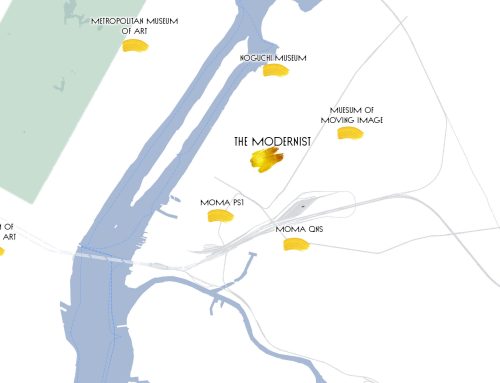
At The Modernist Hotel, we’re a family-run boutique property right in the heart of Long Island City. Our 16 suites are decorated with original artwork by local NYC artists, and the hotel includes an on-site gallery, a rooftop Skydeck with unobstructed Manhattan skyline views, and a genuine connection to the neighborhood we call home.
Guests tell us they appreciate being able to return to a calm, residential setting after a full day in the city. The subway is steps away, Gantry Plaza State Park is walkable, and the local restaurant scene gives you something new to try every night without ever leaving Queens.
It’s a different kind of New York City experience, and for a lot of travelers, it turns out to be exactly what they were looking for.
Quick Pros and Cons: Queens vs Manhattan
If you want a fast summary before making your decision, here it is:
| Queens | Manhattan | |
|---|---|---|
| Hotel rates | Lower (typically 20-40% less) | Higher, especially in Midtown |
| Room size | Generally larger | Often compact |
| Sightseeing access | Short subway ride | Walking distance |
| Airport proximity | Closest to LGA and JFK | Closer to EWR |
| Neighborhood vibe | Residential, local, diverse | Busy, iconic, urban |
| Food scene | World-class international variety | Excellent but pricier |
| Noise level | Quieter | Louder |
| Best for | Value seekers, repeat visitors, families | First-timers, walkability lovers |
Queens Pros
- Significantly lower hotel rates
- Larger rooms for the price
- Diverse, authentic food scene
- Close to LGA and JFK airports
- Quieter and less crowded
Queens Cons
- Major sights require a subway ride
- Less nightlife variety than Manhattan
- Fewer hotel options overall
Manhattan Pros
- Walking distance to iconic attractions
- World-class dining and nightlife
- Unbeatable energy and atmosphere
- Wider range of hotel types and styles
Manhattan Cons
- Higher prices across the board
- Smaller rooms for the money
- More noise and crowds
- Can feel overwhelming
FAQs: Staying in Queens vs Manhattan
Is the subway from Queens to Manhattan reliable and safe?
Yes. The NYC subway runs 24 hours a day, 7 days a week, and is used daily by millions of commuters and visitors alike. From Long Island City, you have multiple lines with frequent service into Midtown and beyond. While delays happen (as they do on any transit system), the subway is generally reliable and safe for everyday use.
How long does it take to get from Queens to Times Square?
From Long Island City, Times Square is approximately 15-25 minutes by subway, depending on which line you take and the time of day. The E and M trains from Queens Plaza or Court Square stations are the most direct options.
Are there good family-friendly hotels in Queens?
Yes. Long Island City in particular has a growing number of modern hotels with spacious rooms that work well for families. Larger rooms, kitchenettes, and proximity to parks like Gantry Plaza State Park make Queens a practical and comfortable choice for families traveling with kids.
Is Queens safe for tourists?
Yes, the main visitor areas of Queens, including Long Island City, Astoria, and Flushing, are safe and well-trafficked. As with any major city, it’s sensible to stay aware of your surroundings, especially at night. But visitors generally find Queens welcoming, walkable, and easy to navigate.
Is it cheaper to stay in Queens than Manhattan?
In most cases, yes. Queens hotel rates are typically 20-40% lower than comparable Manhattan properties. The savings are even more noticeable during peak travel periods when Manhattan prices rise sharply. Larger room sizes in Queens also mean you’re often getting more value per dollar spent.